



How to Choose a CNC Laser Cutter? A Complete Guide Before Buying a Fiber Laser
In recent years, laser cutting technology has completely transformed the way metal components are manufactured. Companies seeking greater efficiency, higher quality, and the ability to tackle more demanding projects are increasingly opting for modern fiber laser cutters.
However, purchasing a CNC laser is a long-term investment. The power of the laser source or the price of the machine alone should not be the only selection criteria. Production efficiency is determined by the entire system—the machine’s design, the technology used, the software, automation, and the manufacturer’s experience.
Eckert has been developing CNC technologies for industry for over 35 years and has also specialized in fiber laser technology for over 15 years. As a result, the company combines many years of experience with the latest solutions used in modern manufacturing.
What is a fiber laser, and why has it become the industry standard?
A fiber laser is a technology that uses a special laser source to transmit a beam of light through an optical fiber. This solution enables high process efficiency and very high-quality cutting of various materials.
Modern FIBER fiber lasers offer greater energy efficiency, high operating speeds, and the ability to precisely process a wide range of metals.
Thanks to these properties, fiber laser cutting is used in industries such as machine building, steel construction, the automotive industry, and the energy sector, and is perfectly suited to the needs of mass production.
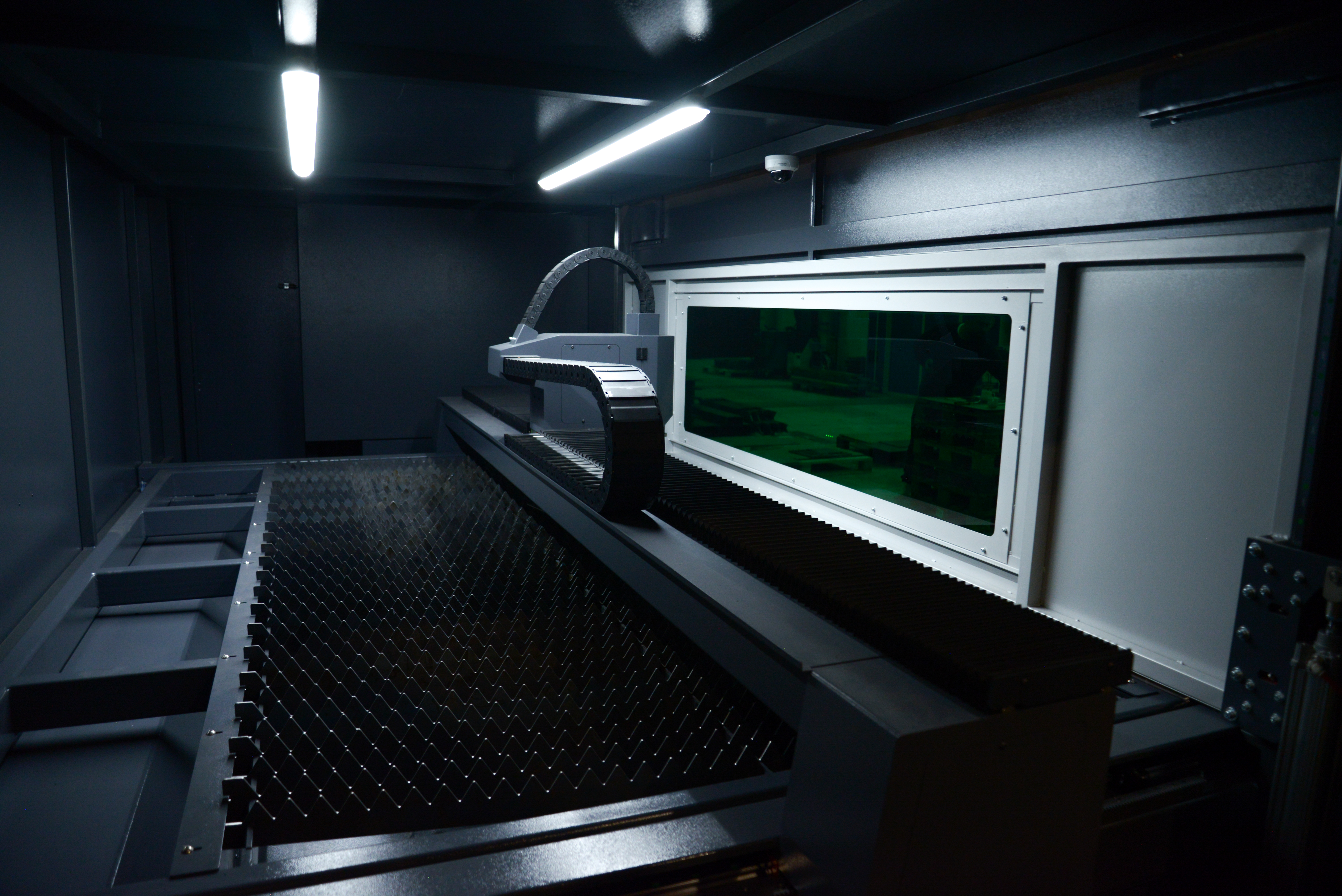
Key advantages of fiber lasers
The choice of fiber technology stems primarily from the benefits it offers in day-to-day production.
High-quality and precise cutting
One of the most important advantages of fiber technology is the ability to produce highly accurate parts while maintaining high repeatability.
The laser cutting process allows for the production of complex shapes with high accuracy, reducing the need for additional machining after the process is complete.
Edge quality is of particular importance to manufacturers, as it affects the aesthetics and further processing of finished parts.
High Production Efficiency
A modern CNC laser significantly reduces the time required to produce parts. High cutting speed, automatic parameter adjustment, and intelligent control systems increase the efficiency of the entire process.
In mass production, even a slight reduction in cycle time can translate into a significant increase in a company’s production capacity.
Low operating costs
One of the key advantages of fiber lasers is their high energy efficiency. The design of the fiber-optic source helps reduce energy consumption and lower operating costs compared to earlier solutions.
When selecting a machine, it is important to consider not only the purchase price but also the total cost of ownership over the entire service life.
How to Choose the Right CNC Laser Cutter?
Selecting the right machine should be preceded by an analysis of production needs. Not every company needs the same solution.
When selecting a laser cutter, it’s worth considering:
- the type of materials being processed,
- the thickness of the sheets being cut,
- the size of the worktable,
- the required throughput,
- the number of operating hours,
- and the potential for future expansion.
A metal laser cutter should be tailored to the nature of production. Different parameters will be important for a company producing individual parts, and different ones for a facility manufacturing thousands of parts per month.
What laser power should you choose?
One of the most frequently asked questions is: what laser power is appropriate?
Machines with various power levels are available on the market—ranging from solutions designed for thin materials to high-power lasers used in demanding industrial processes.
Higher power allows for increased cutting speed and enables work with thicker materials, but it is not always the best choice.
Efficiency is determined by a combination of many factors:
- laser source power,
- head quality,
- structural stability,
- CNC control system,
- process parameters.
Therefore, the choice of machine should be based on actual production needs, not solely on a single parameter.
What materials can be cut with a fiber laser?
A CNC fiber laser enables precise cutting of many metallic materials. The most commonly used materials are:
- carbon steel,
- stainless steel,
- aluminum,
- copper,
- brass,
- galvanized sheet metal.
Laser metal cutting technology ensures high precision and repeatability even for complex parts. Thanks to the narrow cut width and limited heat-affected zone, high-quality results can be maintained.
Fiber or CO₂ laser—which technology should you choose?
Just a few years ago, CO₂ lasers were widely used in industry. However, advances in fiber-optic technology have led more and more companies to choose fiber solutions. The most important advantages of fiber technology include:
greater energy efficiency,
- faster cutting of many materials,
- the ability to process non-ferrous metals,
- lower operating costs,
- and lower maintenance requirements.
Modern fiber laser cutting machines have now become one of the essential tools in facilities that prioritize automation and increased production efficiency.
Laser or plasma? Often, the best solution is a combination
In many manufacturing facilities, these technologies complement each other:
Fiber laser is ideal for fast and precise processing of thin and medium-gauge sheet metal, where high edge quality and machining accuracy are critical.
CNC plasma is the ideal solution for cutting large and thick structural components, where productivity and the ability to process heavy materials are essential.
That is why companies carrying out a variety of projects are increasingly choosing multi-technology machines, which allow them to select the appropriate cutting method based on the type of material, thickness, and production requirements.
How much does CNC laser cutting cost?
The cost of laser cutting depends on many factors:
- the type of material,
- sheet thickness,
- cutting parameters,
- energy consumption,
- technical gases,
- consumables.
Therefore, when purchasing a machine, you should analyze not only the price of the equipment but also its efficiency during daily operation. A machine with higher productivity can recoup the investment cost more quickly through increased production and a lower cost per part.
Automation of the laser cutting process
The future of the industry lies not only in ever-faster machines but also in intelligent production systems. The automation of production processes includes, among other things:
- automatic material loading,
- unloading of finished parts,
- sheet metal storage,
- machine operation monitoring.
Such solutions allow for increased laser utilization, reduced downtime, and improved efficiency across the entire facility.
Maintenance and operating costs of a CNC laser cutter.
When selecting a CNC laser cutting machine, it is important to consider not only the purchase price of the machine but also the costs of its daily operation. Regular maintenance directly impacts the machine’s service life, the stability of the cutting process, and the maintenance of high-quality parts.
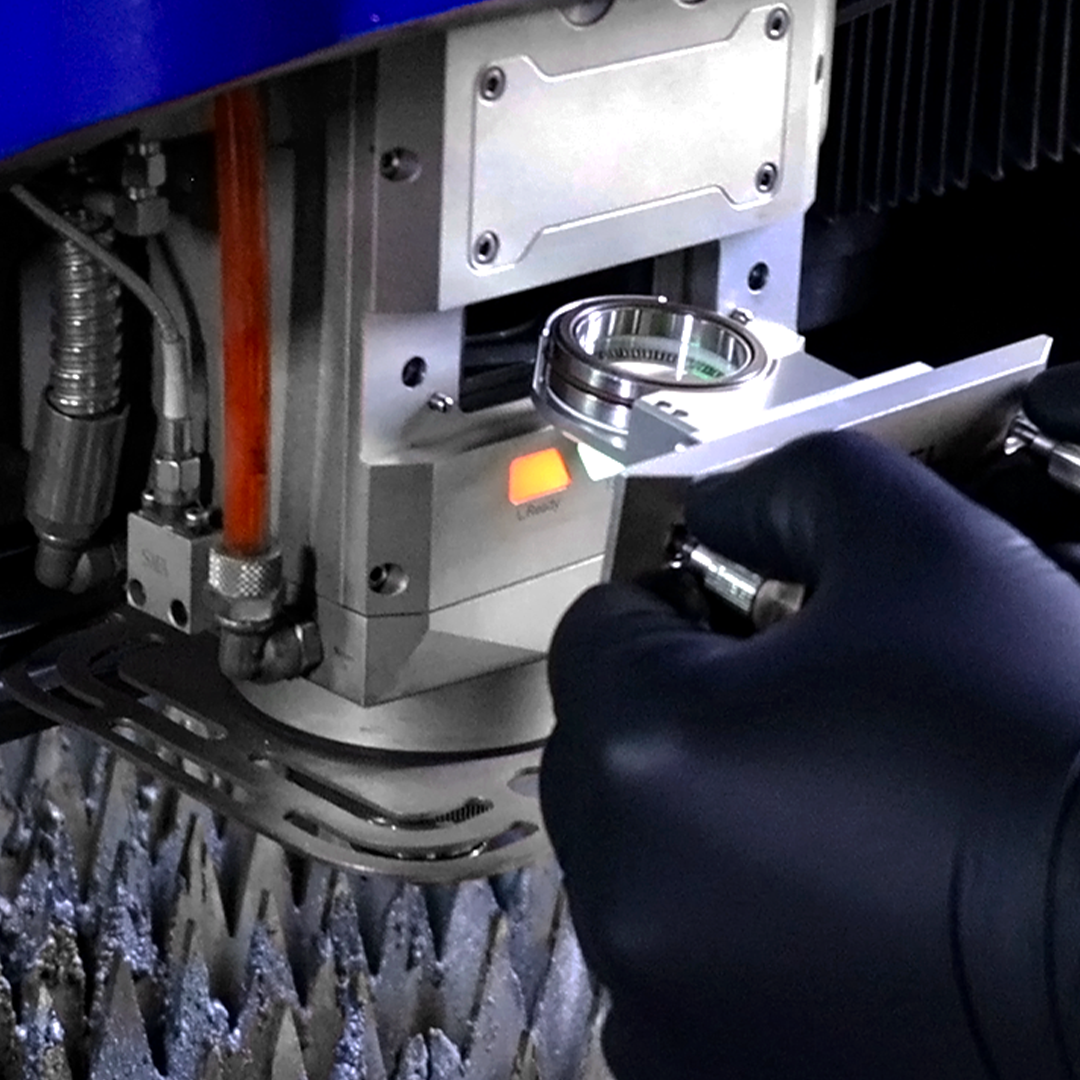
The operating costs of a laser cutter include, among other things, the replacement of parts that wear out during operation, such as nozzles, protective lenses, filters, and cooling system consumables. Regular inspection of mechanical systems, cleaning the work area, and proper calibration of the machine are also important.
Modern fiber lasers require less maintenance than older technologies, but even the most advanced machine requires proper care. Systematic inspections help prevent unplanned downtime and maintain high cutting precision for many years.
Therefore, when choosing a manufacturer, it is worth paying attention not only to the machine’s technical specifications but also to the availability of service, replacement parts, and technical support. Eckert provides comprehensive service to its customers—from installation and commissioning of the machine, through operator training, to service and access to genuine replacement parts. This allows users to focus on production, confident that their equipment is operating reliably and efficiently.
Why Choose an Experienced CNC Machine Manufacturer?
A CNC laser machine is an investment that should last for many years. That is why choosing the right manufacturer is just as important as selecting the machine’s technical specifications. An experienced manufacturer provides proven design solutions, continuously evolving technology, parts availability, professional service, and technical support.
Since 1990, Eckert has been designing and manufacturing CNC machines for industry. Over 15 years of experience in laser technology has allowed the company to create successive generations of solutions that meet the needs of modern manufacturing.
Today, Eckert is embarking on the next stage of cutting technology development.
Choosing a CNC machine manufacturer is a decision that affects production efficiency for many years to come. The manufacturer’s experience, technological expertise, and service infrastructure are crucial to the security of your investment. Eckert has been developing and manufacturing CNC cutting machines for industry since 1990. For over three decades, the company has gained experience in designing and implementing cutting technologies, having been the largest—and for a long time one of the few—manufacturers of CNC machines on the market.
Since its inception, Eckert has focused on developing its own technological solutions to meet the needs of metalworking companies. Its long-standing presence in the industry has allowed the company to accumulate unique expertise in plasma, oxy-fuel, waterjet, and laser cutting processes. Today, after more than 35 years in business, the company remains among the select group of leading manufacturers of CNC cutting machines in Poland. Hundreds of installations and thousands of completed projects enable the company to effectively advise customers and select solutions tailored to their specific production needs.
Over 15 years of experience in laser technology and the development of successive generations of machines demonstrate that Eckert not only keeps pace with changes in the industry but also actively participates in shaping the future of cutting technology.
The third generation of Eckert lasers marks the next stage in over 35 years of innovation.
What is a fiber laser, and what are its advantages?
What is a fiber laser, and what are its advantages?
Fiber laser cutting is a technology that uses a beam of light transmitted through an optical fiber. It offers high cutting speed, precision, low energy consumption, and excellent edge quality.
How to Choose the Right CNC Laser Cutter?
How to Choose the Right CNC Laser Cutter?
The machine should be selected based on the type of production, materials, sheet thickness, and required throughput. Not only is laser power important, but so are the machine’s design, cutting head, CNC control system, and the manufacturer’s experience.
What CNC laser power should you choose?
What CNC laser power should you choose?
Laser power depends on the type and thickness of the materials being cut, as well as the desired throughput. Higher power allows for faster cutting of thicker workpieces, but the best solution always depends on specific production needs.
What materials can be cut with a fiber laser?
What materials can be cut with a fiber laser?
Fiber lasers can cut carbon steel, stainless steel, aluminum, copper, brass, and galvanized sheet metal. They are widely used in many sectors of the metalworking industry.
Fiber Laser or CO₂ Laser-Which Technology Should You Choose?
Fiber Laser or CO₂ Laser-Which Technology Should You Choose?
Modern fiber lasers offer higher energy efficiency, faster metal cutting, and lower operating costs than older CO₂ lasers. That is why they have become the standard in many manufacturing facilities.
What parameters affect the quality of a CNC laser cut?
What parameters affect the quality of a CNC laser cut?
The most important parameters are laser power, cutting speed, head position, process gas, nozzle, and head settings. Selecting the correct values for these parameters affects edge quality and production efficiency.
How much does it cost to operate a CNC laser?
How much does it cost to operate a CNC laser?
Costs depend on energy consumption, technical gases, consumables, and the intensity of use. Modern fiber lasers are characterized by lower operating costs and reduced maintenance requirements.
Dlaczego warto wybrać producenta z doświadczeniem?
Dlaczego warto wybrać producenta z doświadczeniem?
Doświadczony producent zapewnia sprawdzone rozwiązania, serwis i wsparcie technologiczne. Eckert od 1990 roku rozwija technologie CNC, a od ponad 15 lat specjalizuje się również w laserach światłowodowych FIBER.