



The Best Fiber Laser Cutting Head - Manufacturer Rankings and Selection of Fiber Laser Cutting Parameters
Modern fiber laser systems have revolutionized metal processing. Thanks to fiber laser technology, it is possible to achieve very high cutting speeds, high precision, and excellent quality of finished parts. For this reason, fiber laser cutters are now the standard in manufacturing facilities in the steel construction, automotive, machine tool, and equipment manufacturing industries.
When comparing the capabilities of different machines, many users focus primarily on the power of the laser source. This is, of course, one of the most important parameters, but it is not the only one. Even the most powerful fiber laser will not deliver the expected results if it is paired with an improperly selected laser head or a poorly configured optical system.
It is the laser head that is responsible for precisely focusing the beam, maintaining the correct distance from the material, and controlling the entire cutting process. Its design determines not only the quality of the cut edges but also operational stability, production efficiency, and the service life of consumable components. In modern fiber laser machines, the head is one of the most technologically advanced components and largely determines the capabilities of the entire system.
Why is the laser head so important?
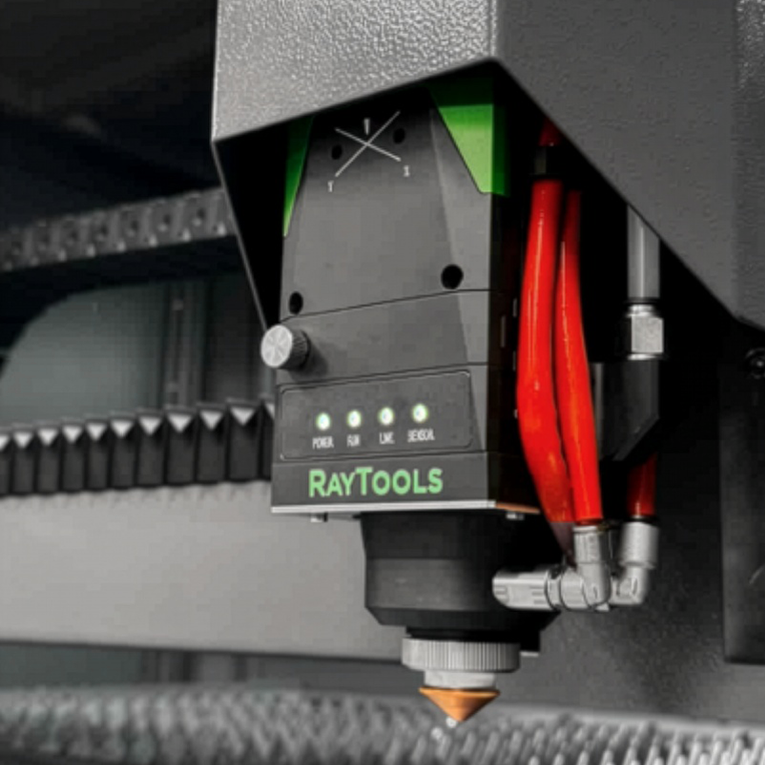
During operation, the head is located closest to the material being processed. The laser beam passes through it and is precisely focused at the focal point. At the same time, it is responsible for supplying process gas, maintaining the proper height above the material, and continuously monitoring process parameters.
Therefore, the quality of the head determines whether the fiber laser cutter will operate at full capacity and whether it will be possible to utilize the full potential of the laser source. A properly selected head affects the quality of the cut edges, the dimensional accuracy of the parts, process stability, consumable usage, and overall production efficiency.
Modern laser cutting heads are equipped with advanced optical systems, automatic focus adjustment (Auto-Focus) systems, height sensors, and protective features that shield the lenses from dirt and damage. This makes it possible to achieve consistent results when cutting both thin sheets and materials of considerable thickness.
In practice, this translates to higher production efficiency, less waste, and reduced costs associated with post-processing of components.
What is a laser head and how does it work?
The laser head is the final component of the optical system in every fiber laser cutter. Its primary function is to transfer the beam’s energy to the workpiece and maintain stable conditions throughout the entire cutting process.
The beam generated by the fiber laser reaches the head, where it passes through a lens system responsible for its precise focusing. The beam is then directed onto the surface of the material, causing localized melting or vaporization. At the same time, a technical gas is fed through a nozzle to remove molten material from the cut and stabilize the entire process.
Modern cutting heads perform far more tasks than simply guiding the laser beam. They are also responsible for automatically adjusting the focal position, controlling the height above the material, monitoring operating parameters, and protecting optical components from contamination. As a result, the operator does not have to manually adjust the settings every time the material thickness changes, which significantly reduces production setup time.
Advanced solutions used in modern fiber laser machines also allow for real-time compensation of minor deviations in the material’s surface. This translates to high-quality cuts even when processing large sheets of metal.
Laser cutting parameters - what determines the quality of the process?
The laser head alone cannot guarantee perfect results. It is equally important to select the appropriate process parameters, which should be tailored to the type of material, its thickness, and the expected cut quality.
Laser Power
The power of the laser source determines the amount of energy transferred to the material during the cutting process. The higher the power, the greater the ability to process thicker sheets and achieve higher production speeds. However, this does not mean that higher power always translates to better results.
Modern fiber lasers now reach powers of 20, 30, and even 80 kW. Such high power levels require the use of heads with very high thermal resistance and a stable optical system. Otherwise, the lenses may overheat, beam quality may deteriorate, and consumable parts may wear out more quickly.
That is why manufacturers of fiber laser machines are paying increasing attention to effective cutting head cooling, protection of the optics, and precise beam guidance - even during many hours of operation at maximum load.
Laser cutting speed
One of the most important parameters affecting production efficiency is cutting speed. Fiber laser technology enables significantly higher speeds than traditional machining methods, but only when all system components work together properly.
Excessive speed can lead to undercutting, poor edge quality, and an unstable process. Conversely, moving the head too slowly causes excessive heating of the material, increases the heat-affected zone, and results in higher energy consumption.
Selecting the appropriate speed should take into account the type of material being processed, its thickness, the power of the fiber laser source, the process gas used, and the nozzle parameters. Only the proper combination of all these elements allows for high-quality cutting while maintaining high production efficiency.
Focal Point Position - Why Is It Critical?
One of the most important parameters affecting cut quality is the focal position of the laser beam. It is at this point that the energy is concentrated on a small area of the material, enabling it to melt or vaporize quickly.
Even a slight deviation in the focal point’s position can result in poorer edge quality, an increased cut gap width, or the formation of burrs. This problem becomes particularly noticeable when processing thick sheets and when using high-power fiber lasers, where accuracy requirements are significantly higher.
That is why modern fiber laser machines are equipped with Auto-Focus systems, which automatically adjust the focal position based on the thickness and type of material. The operator does not need to make manual adjustments before each program change, which reduces production setup time and minimizes the risk of errors.
Automatic adjustment also helps maintain high cutting quality during mass production, where the repeatability of each part is of paramount importance.
Process gas and the nozzle n- elements that are more important than they seem
The quality of the process is determined not only by the laser source or the cutting head itself. Equally important is the proper selection of process gas and the cutting nozzle, as they are responsible for removing molten material from the cut and stabilizing the entire process.
Two gases are most commonly used:
Oxygen is used primarily for cutting structural steel. It participates in the combustion reaction of the material, enabling efficient cutting of thicker materials with relatively low energy consumption.
Nitrogen is used primarily when cutting stainless steel and aluminum. As an inert gas, it does not react with the material, resulting in bright, clean edges free of discoloration. For this reason, it is the standard choice wherever the aesthetic quality of the finish is important or where the parts will later be painted or welded.
It is also important not to overlook the proper selection of the nozzle. Its diameter, geometry, and technical condition directly affect the concentration of the gas stream, the efficiency of molten metal removal, and the stability of the process. Even minor damage to the nozzle can reduce cut quality and increase consumable usage.
The best manufacturers of laser heads
The market for fiber laser heads is growing very rapidly. Increasing source power and ever-stricter quality requirements mean that manufacturers are constantly improving their solutions.
Five brands are particularly well-regarded worldwide: RayTools, Precitec, WSX, OSPRI, and IPG Photonics. Each offers solutions designed for slightly different applications and market segments.
RayTools - a proven solution for most applications
For many years, RayTools has remained one of the most popular manufacturers of heads used in fiber laser machines. This brand’s products can be found in both cost-effective laser cutters and more advanced industrial systems.
A major advantage of RayTools solutions is the combination of high-quality workmanship with reasonable operating costs. The manufacturer offers effective automatic focus adjustment systems, durable optical systems, and wide availability of replacement parts, which translates to low maintenance costs.
This brand’s cutting heads are ideal for the production of steel structures, sheet metal processing, and in facilities engaged in mass production.
The most popular models include BM111, BM114S, BM115, BM132, and BT240.
Precitec - the highest precision for demanding applications
While RayTools can be considered a universal solution for most applications, Precitec has been setting the standard in the premium segment for years. The heads from this German manufacturer are used in facilities where maximum accuracy, high reliability, and the ability to work with very high-power fiber lasers are essential.
Precitec devices are designed for many hours of continuous operation. The optical systems used feature high resistance to reflected radiation and excellent thermal stability, allowing them to maintain their performance even during intensive use.
Another major advantage of these heads is their advanced cooling systems. They effectively dissipate heat from the optical components, protect the lenses from damage, and extend their service life. In practice, this means a lower risk of downtime, lower operating costs, and the maintenance of high-quality cuts over a long period of time.
High-quality optics and extremely precise focus control enable smooth surfaces, minimal burr, and a very narrow cut gap. This is why Precitec cutting heads are frequently chosen by manufacturers in the automotive and aerospace industries, as well as by companies engaged in high-volume production.
The best-known models are ProCutter 2.0, ProCutter Zoom, LightCutter, and FineCutter.
What features should a modern laser cutting head have?
Modern heads used in fiber laser machines differ not only by manufacturer but, above all, by the technological solutions employed. Leading manufacturers, such as RayTools, Precitec, WSX, OSPRI, and IPG Photonics, are developing their designs in a similar direction—increasing precision, automation, and resistance to operation with fiber lasers of ever-increasing power.
When selecting a laser head, it is important to pay attention primarily to several key elements.
Automatic Focus Adjustment (Auto-Focus)
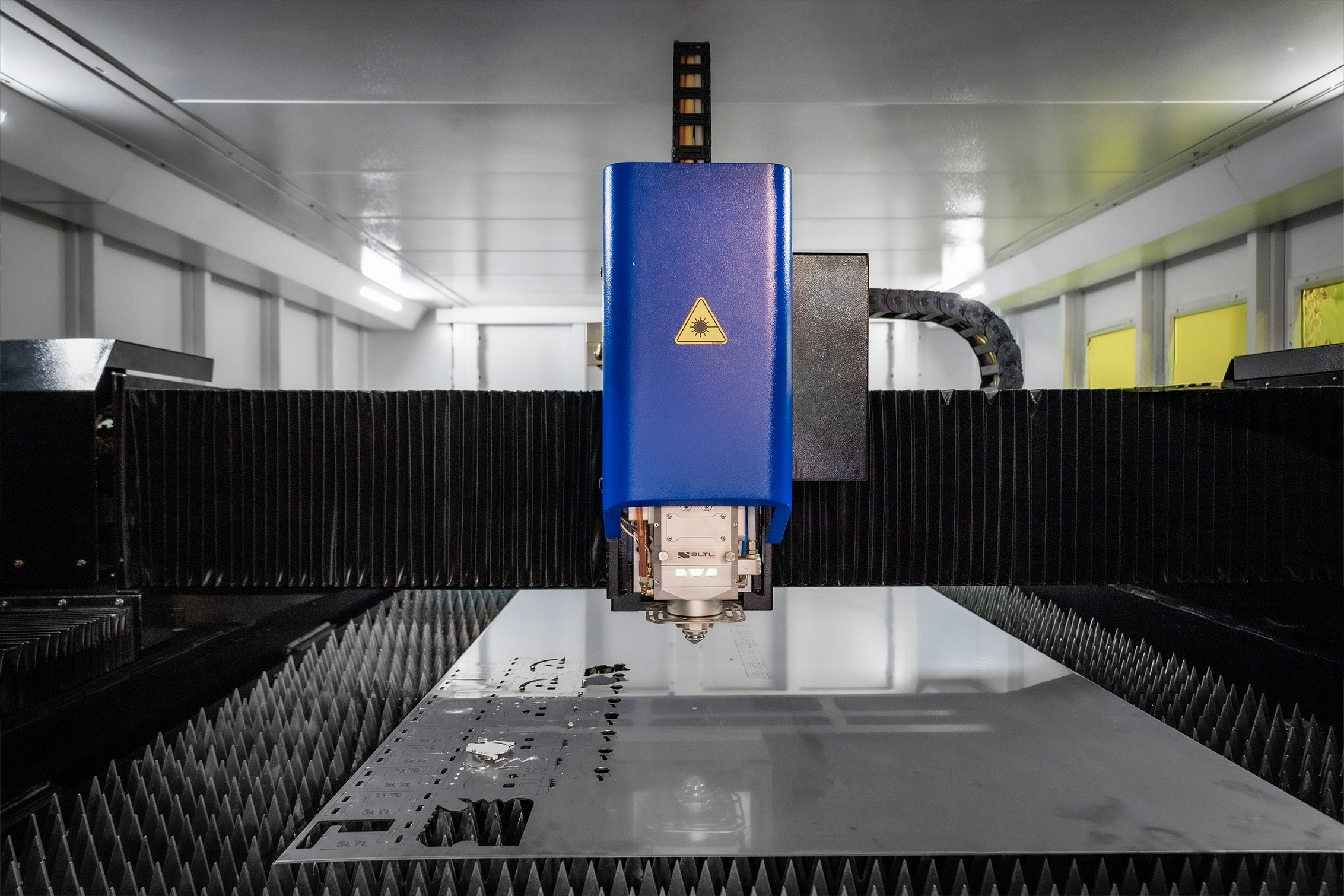
Modern cutting heads are equipped with an Auto-Focus system that automatically adjusts the focal position to the type and thickness of the material. The operator does not need to manually change parameters when switching between different programs, which reduces setup time and minimizes the risk of errors.
This solution is now standard in professional fiber laser machines, especially those used for mass production.
Optical stability
As the power of fiber laser sources increases, so do the demands placed on the optical system. The head must maintain high stability even during many hours of operation at powers exceeding 20 or 30 kW.
That is why manufacturers are using increasingly advanced optical systems that are resistant to reflected radiation and temperature fluctuations.

Efficient Cooling
During laser cutting, the cutting head operates under extremely demanding conditions. Reflected radiation and high temperatures can lead to overheating of the lenses and a deterioration in beam quality. Modern cooling systems effectively dissipate heat, protect optical components, and extend the service life of consumables. As a result, the machine maintains high cutting quality even during intensive production.
Height Sensors
Modern laser cutters are equipped with capacitive height sensors that continuously monitor the distance between the nozzle and the material. This solution ensures stable cutting conditions even when the sheet being processed is not perfectly flat. This is particularly important when cutting large-format sheets and components with variable geometries.
Protection of the Optical System
Lenses are among the most expensive consumable components of a laser head. For this reason, manufacturers use special protective glass and systems to monitor their condition. This helps reduce the risk of damage to the optics, shorten maintenance time, and lower operating costs.
Are you looking for a laser cutter tailored to your production needs?
Contact the experts at Eckert. We’ll help you select the right fiber laser machine configuration, optimize your laser cutting parameters, and choose the solution that best meets your facility’s needs. Schedule a demonstration and see for yourself how a state-of-the-art fiber laser can increase the efficiency and profitability of your production.
Summary
Choosing the right laser head is crucial for the performance and quality of any fiber laser cutting machine. It is responsible for precise beam guidance, maintaining the correct head position, process stability, and the efficient use of fiber laser power. Even the most advanced laser source will not deliver the expected results if the other system components do not work together properly.
Many factors influence the quality of laser cutting - from technological parameters and the type of process gas, through the optical system and cooling system, to a properly selected cutting head. Therefore, when selecting a machine, it is important to consider the entire system, not just the power of the laser source. This comprehensive approach translates into higher-quality parts, greater production efficiency, and lower operating costs.
At Eckert, we design fiber laser machines in which all components - from the laser source, through the cutting head, to the control software - form a cohesive and efficient system. As a result, our customers receive solutions that ensure high precision, reliability, and consistent cutting quality, regardless of the type of material being processed.
What is the best fiber laser cutting head?
What is the best fiber laser cutting head?
There is no single, universal laser head that is best for every application. The choice depends on the laser power, the type of material, the thickness of the sheets, and the production requirements. Among the most highly regarded manufacturers are RayTools, Precitec, WSX, OSPRI, and IPG Photonics. However, the most important factors are not only the brand, but also optical stability, the auto-focus system, cooling, and how well the head integrates with the entire machine.
Which parameters have the greatest impact on fiber laser cutting?
Which parameters have the greatest impact on fiber laser cutting?
The quality and efficiency of laser cutting are primarily influenced by: laser source power, cutting speed, focal position, type of process gas, and nozzle selection. Proper configuration of these parameters ensures high precision, reduced consumption of consumables, and consistent production quality.
Does a higher laser power require a special head?
Does a higher laser power require a special head?
Yes. High-power fiber lasers require heads with greater thermal resistance and a more stable optical system. At power levels of 20 kW, 30 kW, and higher, effective cooling, lens protection, and precise beam control are particularly important.
What are the benefits of the Auto-Focus system in a laser head?
What are the benefits of the Auto-Focus system in a laser head?
Auto-Focus automatically adjusts the focal position relative to the material. This eliminates the need for the operator to manually change settings when working with sheets of varying thicknesses. The system reduces production setup time, improves repeatability, and helps maintain high cutting quality during batch production.
How to Choose the Right Gas for Fiber Laser Cutting?
How to Choose the Right Gas for Fiber Laser Cutting?
The choice of gas depends on the type of material. Oxygen is most commonly used for cutting structural steel, while nitrogen is used for stainless steel and aluminum, where a clean, aesthetically pleasing edge is important. The right gas affects cut quality, cutting speed, and operating costs.
How do you adjust laser cutting parameters based on material thickness?
How do you adjust laser cutting parameters based on material thickness?
The selection of cutting parameters depends on the type of metal, its thickness, and the required finish quality. Thinner sheets require different settings than thick structural components. The laser power, cutting speed, focal length, gas type, and nozzle diameter are of key importance.
Properly selected parameters allow you to utilize the full performance of the fiber laser, achieve precise cuts, and reduce machine operating costs.