



Plasma, oxygen, waterjet, laser - which cutting technology wins in 2026?
In modern industrial manufacturing, the choice of CNC cutting technology has a direct impact on process efficiency, part quality, operating costs and automation capabilities. In 2026, the four main technologies used in industry are plasma cutting, oxygen cutting, waterjet cutting and laser cutting. Each is characterized by a different physical mechanism of the process and a different application profile.
It is the comparison of cutting technologies that makes it possible to determine which method best suits the production requirements of a given plant. In practice, the choice of cutting technology depends on such parameters as the thickness of the material, the expected accuracy of the cut, the speed of implementation or the cost of production. Modern metal cutting technology is developing rapidly, so its development is increasingly focused on automation, efficiency and integration with systems such as Industry 4.0.
Description of contents
CNC plasma cutting (CNC plasma cutting)
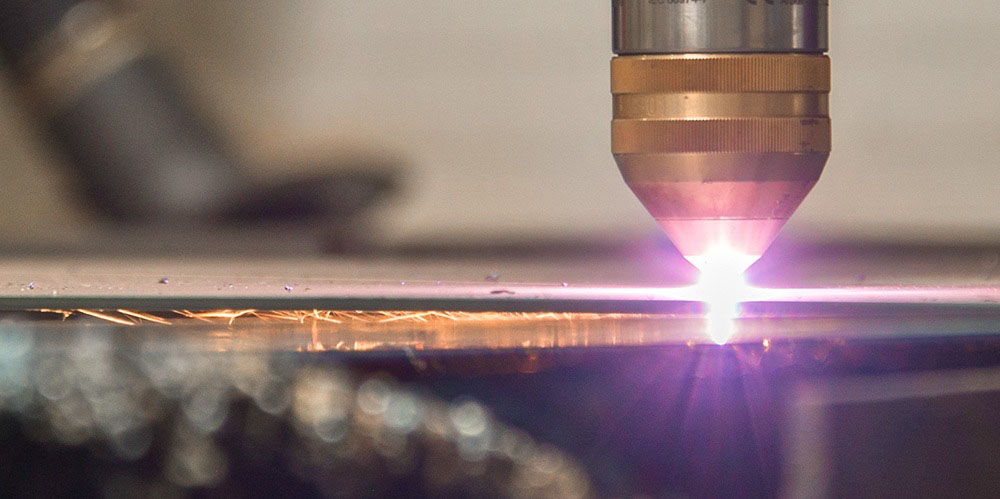
Plasma cutting is a thermal process in which a very high-temperature electric arc causes a local melting of the conductive material, and a stream of gas removes the liquid metal from the cutting gap. In practice, plasma cutting involves the use of ionized conductive gas.
Plasma is used only in electrically conductive materials such as structural steels, stainless steels and aluminum. In an industrial setting, CNC technology makes it possible to work on large ranges of material thicknesses while maintaining very high cutting speeds.
Plasma plasma is used in industrial processes.
For industrial processes, plasma is particularly effective for high-speed cutting of thicker materials and more. The high cutting performance and low operating cost ensure that plasma remains a staple technology for heavy steel fabrication.
The plasma is also a key technology for heavy steel fabrication.
From the point of view of quality parameters, the typical accuracy class corresponds to ISO 9013 level 3-4, which means no concerns about edge quality. Cutting precision is lower than in laser technology, but the high positioning accuracy of modern CNC systems significantly improves the repeatability of the process. Plasma cutting involves a very efficient process, but the trade-offs remain edge quality and more post-processing.
Typical applications include steel structures, machine manufacturing, power generation and prefabrication of welded components.
Oxy-fuel cutting (oxy-fuel cutting)
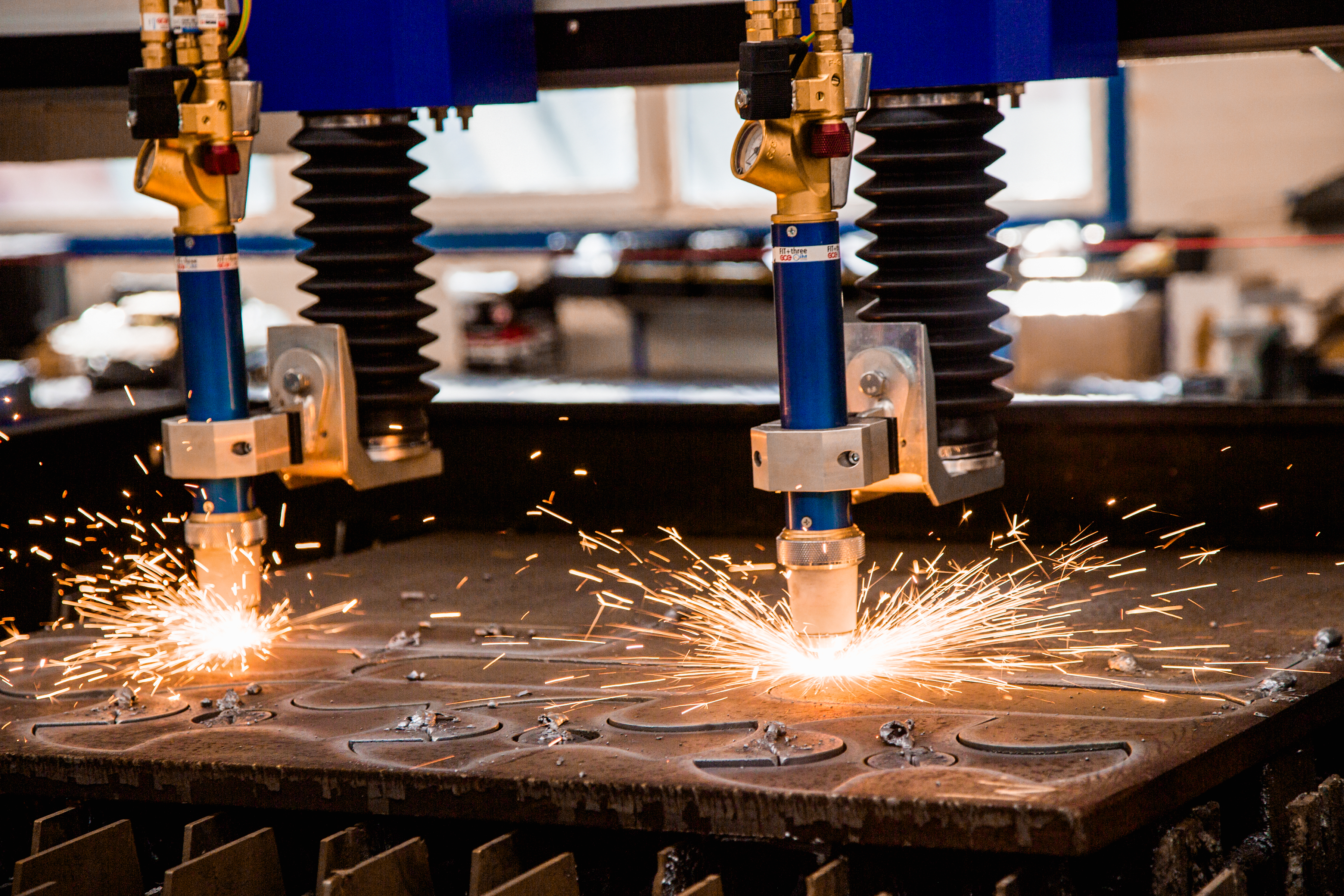
oxy-fuel-cutting is a thermochemical process used mainly for machining thick carbon steels. The process involves heating the material with a gas flame and then introducing a stream of pure oxygen, which causes oxidation and removes the material from the cutting gap.
The technology is used primarily in heavy industrial production, where it is necessary to cut very thick steel sheets, often exceeding the capabilities of other methods. However, oxyfuel cutting does not work well for aluminum, stainless steel or most non-ferrous metals.
The technology is not suitable for the production of steel.
Compared to plasma and laser, the process has lower speeds and greater thermal effects on the material, but remains an economical solution for large thicknesses. Typical applications include steel structures, heavy industry, power generation, and the manufacture of large machine components.
Typical applications include steel structures, heavy industry, power generation, and the manufacture of large machine components.
Waterjet cutting (abrasive waterjet cutting)
Waterjet cutting is an erosive process where by using a very high-pressure water jet, often with an abrasive additive, enables the cutting process without heat affecting the materials.
Waterjet technology allows for the cutting of a wide range of materials, including metals, composites, ceramics, glass and multilayer materials. Waterjet technology is one of the most versatile solutions used both as a technology for cutting sheet metal and other industrial materials.
Waterjet technology is one of the most versatile solutions used both as a technology for cutting sheet metal and other industrial materials.
Water jet cutting ensures the absence of thermal deformation and the ability to process materials that are very sensitive to temperature. As a result, the cutting of sensitive materials such as composites or aerospace components is carried out without the risk of structural changes in the material. The precision of waterjet cutting invariably remains one of the greatest assets of this technology.
In practice, waterjet cutting ensures very good surface quality and high quality of the finished part. In addition, the precision of water cutting makes it possible to realize complex geometries with minimal material stresses. In many industries, it is the precision of water cutting that determines the choice of this technology.
From the point of view of process quality, waterjet cutting ensures high edge quality and no structural changes in the material. Cutting accuracy depends on the configuration of the system, but in industrial conditions it reaches a level of ±0.1 to ±0.3 mm. High precision and the possibility of realizing complex details make this solution applicable to the production of advanced components.
The main limitation remains the lower cutting speed and lower cutting speed compared to laser and plasma technologies. In addition, the disadvantages of waterjet cutting include high operating costs due to wear and tear of abrasive, nozzles and high-pressure system components.
The technology is also used in the production of advanced components.
This technology is used in the aerospace industry, in the production of precision components, in the stone industry and wherever it is crucial to eliminate thermal effects.

Laser cutting (fiber laser cutting)
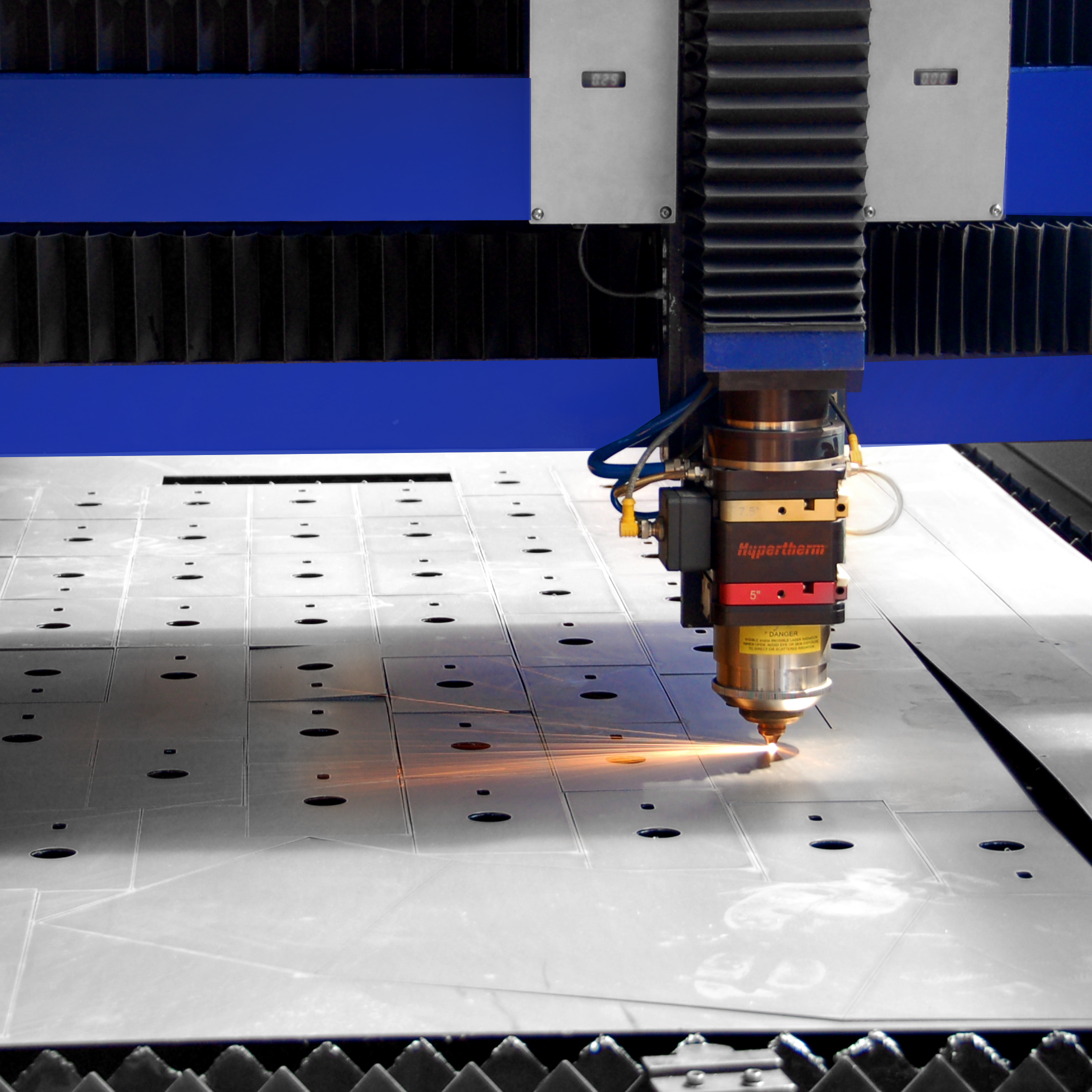
Laser cutting is a thermal process that uses a concentrated beam of electromagnetic radiation to locally melt or vaporize a material. Modern industrial systems most often use a fiber laser with a wavelength of about one micrometer.
Laser is characterized by very high precision and repeatability of the process. Typical industrial accuracy is about ±0.05 mm, making the laser the most precise of the technologies discussed. High accuracy and high quality of cut parts are of key importance in mass production.
Modern laser-based sheet metal cutting technology enables very fast and automated cutting of materials while maintaining excellent surface quality. Laser sheet metal cutting is used in both thin and medium material thicknesses. Laser cutting of aluminum is also particularly popular, which, thanks to the development of technology, is achieving increasingly high process stability.
The cutting process carried out by the laser is characterized by a small cutting gap width and very good edge quality. Thus, laser sheet metal cutting minimizes the need for additional machining. In many cases, the laser provides the highest cutting precision of all industrial technologies.
An important advantage of the technology is also the high level of automation and easy integration with CNC systems and production logistics as part of Industry 4.0. The high cutting speed and very good cutting performance mean that the laser now dominates modern mass production.
Drawbacks include primarily reduced efficiency when cutting thicker materials and high capital cost. Disadvantages of laser cutting also include the greater sensitivity of the process to material quality and problems associated with the reflectivity of some alloys. In addition, the cost of laser cutting increases for very thick materials.
Despite these limitations, the laser remains a key solution wherever high precision, automation and superior edge quality are important.
Which CNC cutting method is better?
A comparison of cutting technologies shows that each method has its own area of optimal application. Plasma has the highest performance for cutting structural steels at large material thicknesses, but the trade-offs remain edge quality and lower cutting precision.
Water jet technology offers superior material versatility and eliminates thermal effects. Water jet cutting provides the ability to work with technologically difficult materials, but the trade-off remains operating costs and lower process speed.
Laser technology provides the highest material versatility and lower process speed.
Laser provides the highest accuracy, high precision and the best integration with automation. At the same time, the disadvantages of laser cutting become more apparent with very large material thicknesses.
Laser cutting is the most effective way of cutting material.
Comparing cutting technologies should take into account not only quality parameters, but also the type of material, material thickness, expected productivity and total production cost. In practice, the choice of cutting technology depends on the specifics of the production process and the quality requirements of the final workpiece.
Comparing cutting technologies should take into account not only the quality parameters, but also the type of material and the expected productivity and total cost of production.
Modern metal cutting technology is increasingly based on a hybrid model, in which plasma, laser and water jet technology operate in parallel in a single plant.
How to choose the right CNC cutting technology?
In the 2026 industrial environment, there is no single dominant cutting technology. Each solution has a distinct role in manufacturing systems.
Plasma remains the optimal solution for heavy production and high throughput. Water jet technology dominates where cutting sensitive materials and eliminating thermal impact are key. Laser, on the other hand, sets the standard for automation, quality and batch production.
A modern comparison of cutting technologies shows that the development of cutting technology is now moving toward the integration of multiple processes into a single CNC production environment. As a result, companies can optimize the cutting process, increase cutting efficiency, and more effectively implement advanced material processing and material cutting processes in various industries.
Which CNC cutting technology is best?
Which CNC cutting technology is best?
There is no single best technology. The choice depends on the material, thickness, quality of cut, and cost of production.
When is it worth choosing plasma cutting?
When is it worth choosing plasma cutting?
Plasma works well for high-speed cutting of steel, aluminum, and other conductive materials, especially in heavy manufacturing.
What are the advantages of waterjet (waterjet) cutting?
What are the advantages of waterjet (waterjet) cutting?
Waterjet has no thermal effects and allows you to cut many materials, including heat-sensitive ones.
Why is laser cutting so popular?
Why is laser cutting so popular?
Laser provides high precision, good edge quality and easy automation of the process.
How to choose CNC cutting technology?.
How to choose CNC cutting technology?.
Take into account the material, its thickness, the required accuracy, the speed of work and the production budget.